Species Plate · Structural Shrubs
Texas Mountain Laurel
Restoration Role
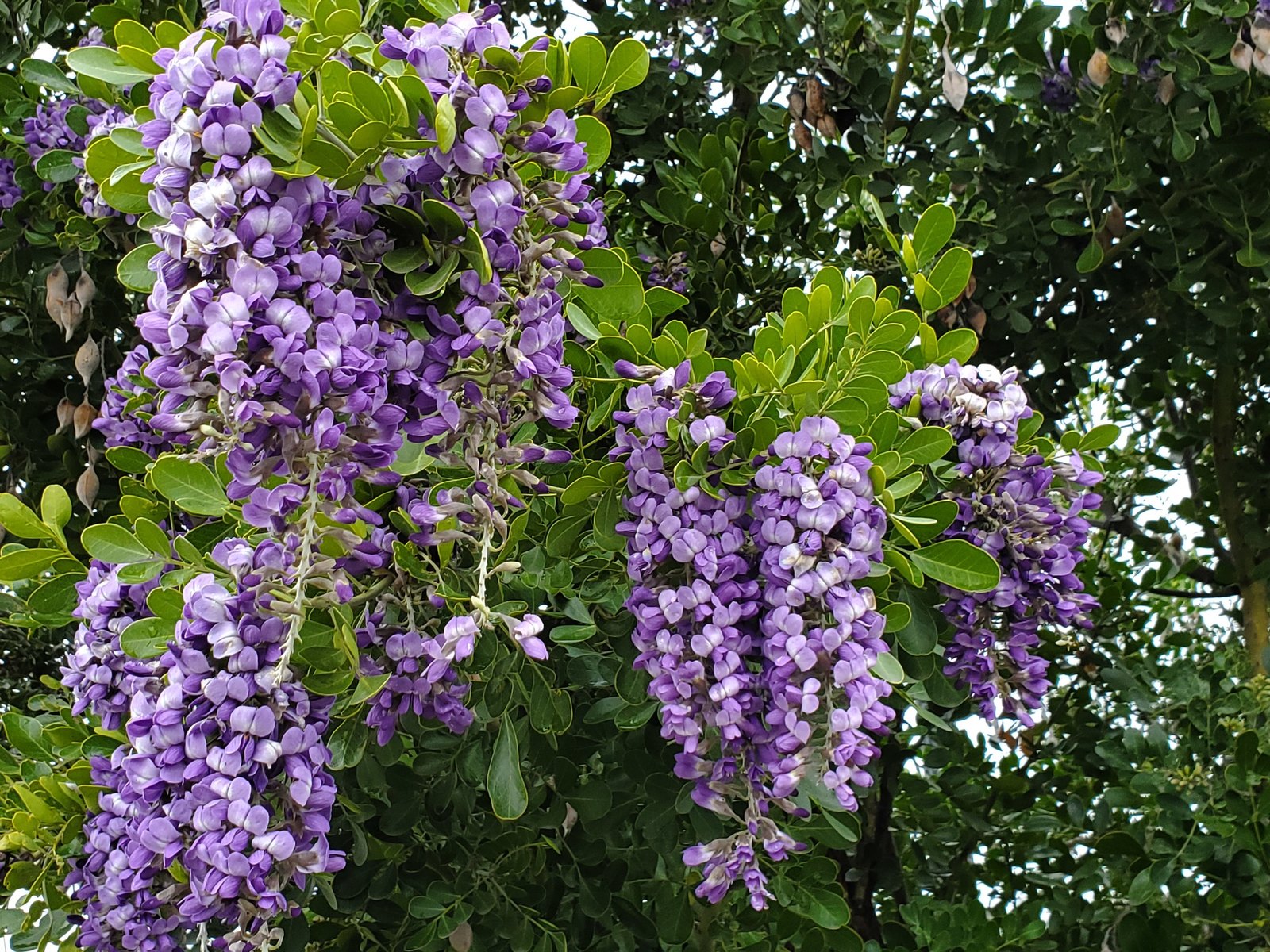
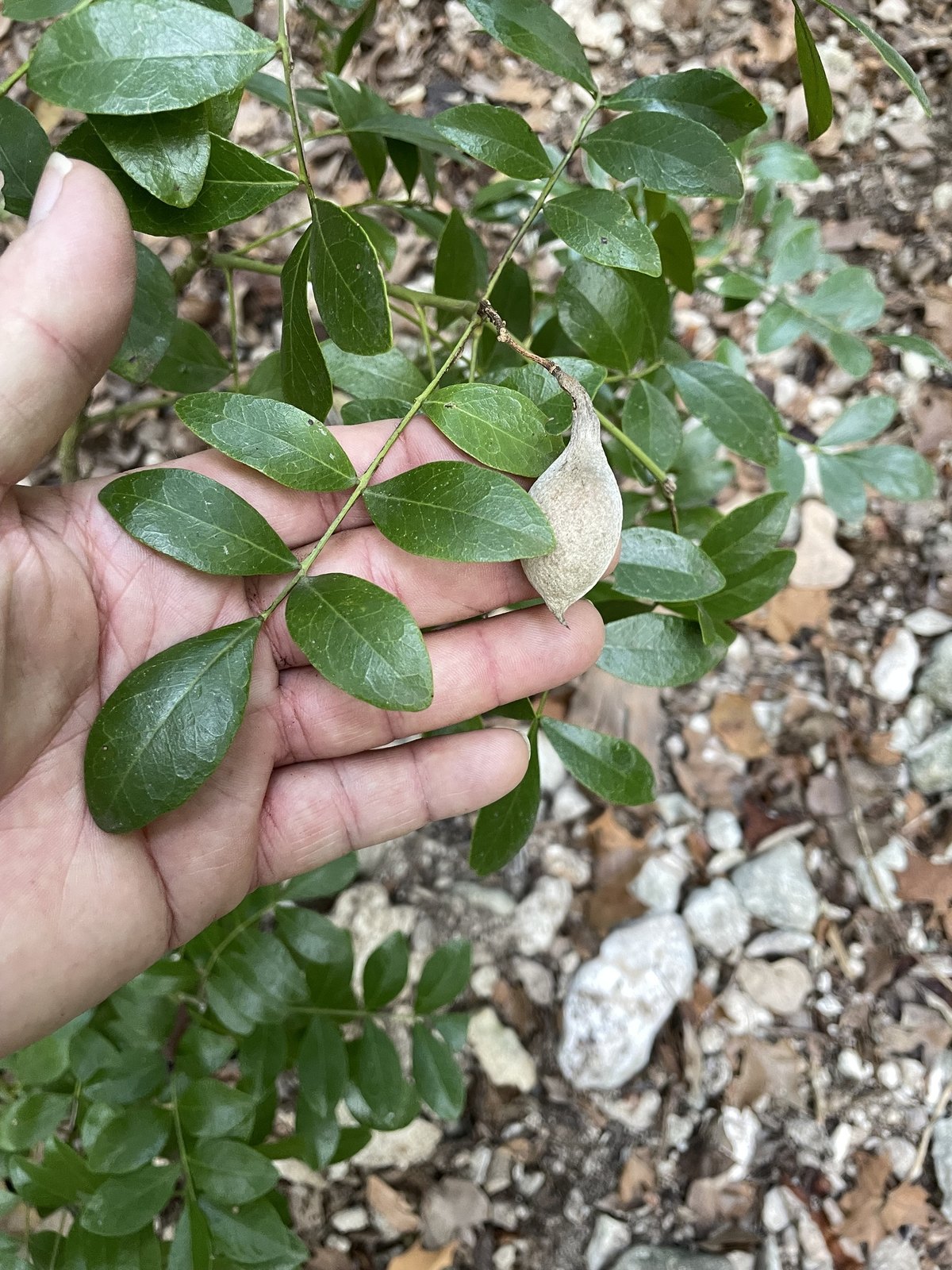
Evergreen understory shrub or small tree for the driest limestone. Texas Mountain Laurel is the grape-soda smell of March in the Hill Country — purple, wisteria-like clusters before most things have leafed out — and then hard gray pods full of red beans that hang on all year. Slow, tough and evergreen, and about as drought-proof as a native shrub gets. Twelve to twenty feet, given decades.
Site Suitability
PrimaryWestern Headwaters Savanna motte edges, Eastern Shelterbelt understory
SecondaryRocky draws and the dry margins of the Drainage Savanna Corridor
AvoidFloodplain, the drainage core, anywhere that holds water, and anywhere near the cabin or where children play
SoilsSeC, SuB, RuB — shallow calcareous ground, caliche and limestone rock
HydrologyDry, sharply drained
RangeEdge of range: NPSOT lists it for the Edwards Plateau, the Southern Texas Plains, the Gulf Prairies and the Chihuahuan Deserts — not the Cross Timbers, where we sit. The Balcones edge of the Plateau is a short drive south, and it is planted all over Lampasas; iNaturalist holds eight research-grade records flagged wild in Lampasas County, which we have not checked one by one. The BONAP / Turner county check is still owed.
Propagation & Care
Seed collectionPods ripen late summer into fall and go woody and gray; the seeds inside are hard, bright red-orange beans. Collect once the pods have dried on the plant. Handle as poisonous: gloves, and none in a pocket.
StratificationNo cold needed — the seed coat is the whole problem. Nick it with a file or sandpaper without going through to the inner coat, soak overnight in water boiled and cooled to warm, and sow. The Wildflower Center says treated seed comes up in about two weeks once the soil is warm; a UT germination trial got 7 of 8 up in two weeks from a light scarify and a rainwater soak.
PropagationSeed, sown one per D40 for the long first root. It does not like being moved out of a flat, and the seedlings do not like overhead water — bottom-water. NPSOT also lists layering and semi-hardwood cuttings in early summer; we have not tried either.
Container progressionSeed → D40 Deepot → Field planting singly at motte edges, or in threes.
Nursery wateringLow. Rot is how you lose it; a wet cell kills more seedlings than drought ever will.
LightFull sun to part shade; flowers best in sun.
OutplantingBest age 12–18 months — it is slow, and a bigger root ball moves better. Plant November–February.
Establishment Watering
- Year 1: 5 gallons every 2–3 weeks during drought.
- Year 2: drought only.
Field notesEvery part is poisonous — NPSOT puts the warning in capitals — and the red beans are exactly the thing a kid picks up. Site it away from the cabin. Genista caterpillars can strip a plant in a day; Bt works if it comes to that. Slow is the word: expect a knee-high plant for the first few years. Provenance: East Austin Foraging.
Quick Reference
Difficulty3 / 5
Growth rateSlow
DroughtExcellent
FloodPoor
WildlifeFair — early nectar for bees; the beans are for nobody
Browse PressureLow — the foliage is toxic and mostly left alone
MethodSeed
ContainerD40 Deepot
SourcesPropagation data from the Short’s Resort Native Tree & Shrub Propagation Manual (SR-PROP-01), checked against the NPSOT Native Plants Database and USDA PLANTS in September 2026. Names follow USDA PLANTS; where NPSOT files the plant differently, its name is given under the title. Browse-pressure ratings are the station’s own judgement, checked against the Lady Bird Johnson Wildflower Center. Photographs via Wikimedia Commons under the licenses noted on each image; credit to the individual photographers above.