The Last Harvest, and the First Burndown
The final cutting of Tifton 85 came off the field in late June. Now we turn roughly 35 of the 90 acres back toward native prairie.
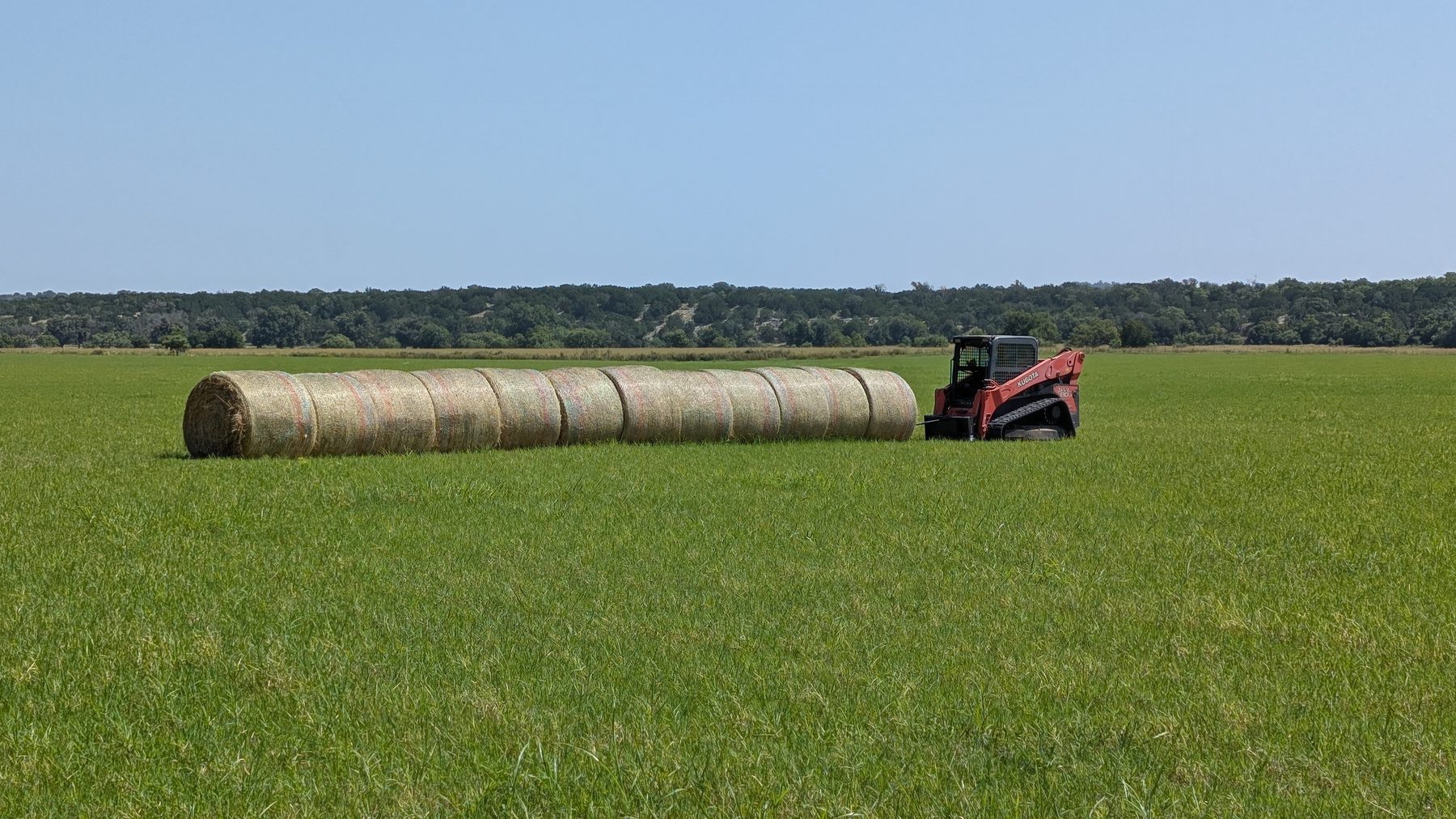 Fig · The last bales off the meadow, moved into the row · late June 2026
Last week, in the last hot days of June, the final full cutting of Tifton 85 bermudagrass came off the field. It was a strange thing to stand next to — good hay, cut clean, large bales, and the last harvest of this size we plan to make. But with the bales off the field the restoration can start.
Over the next few months we are going to treat roughly 35 acres of the property: kill the Tifton 85, prescribed-burn and mulch the thick thatch, and prep the seedbed so that it's ready for the native seed mix in January or February of 2027. This is the first and largest part of phase one, and the word "glyphosate" raises a lot of eyebrows, so we want to be straight about what exactly this entails and why.
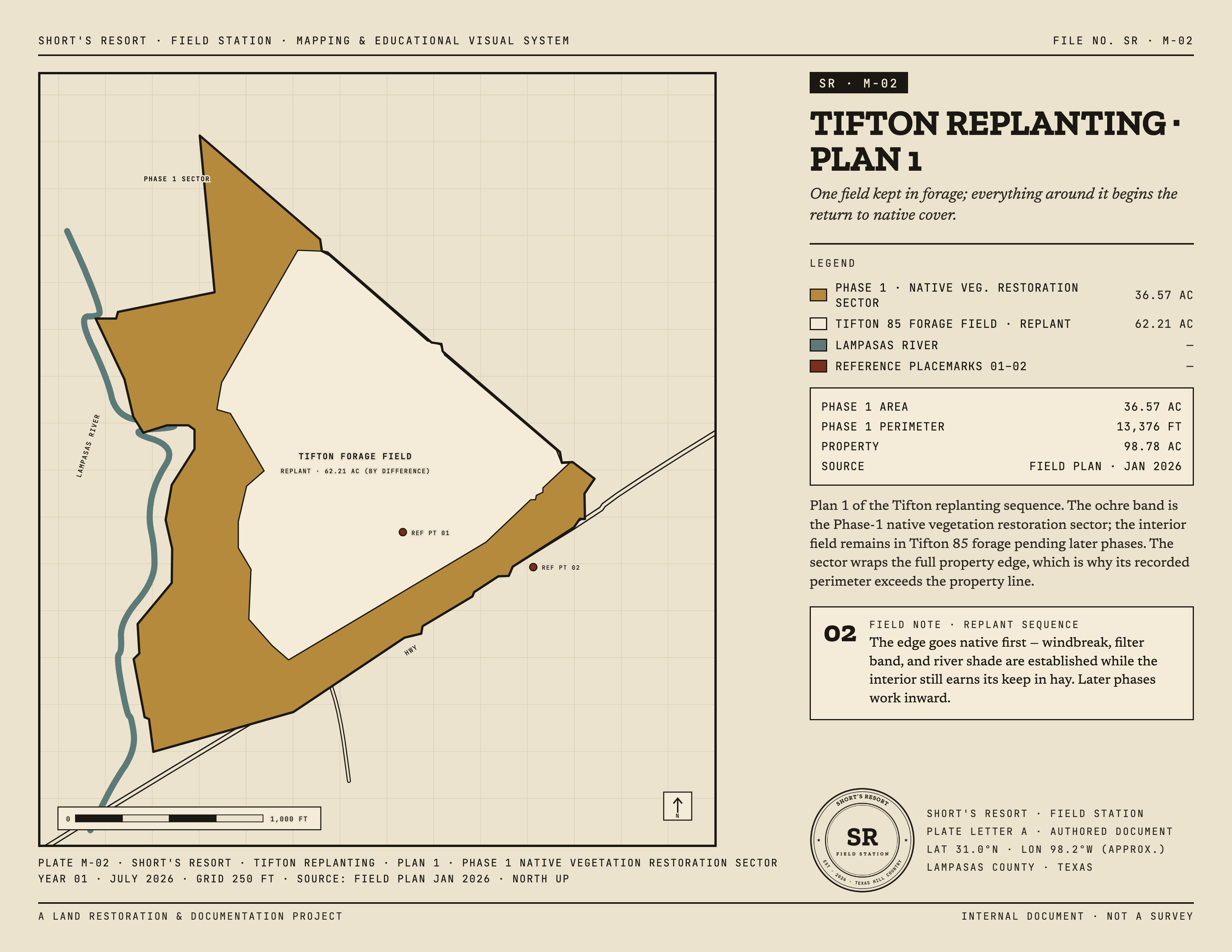
As we've said before in this journal, we are not converting the full 90 acres at once. Roughly 60 acres stays in Tifton 85 for now, kept in hay, until the burndown and native replanting prove themselves. While that happens, we'll do our best to hold clean breaks between the standing Tifton and the new native stands. The retained hay brings in a small but steady income that helps pay for the restoration while the natives get going.
The treatment
The knockdown of the Tifton is a glyphosate application, mixed for the job and directed by Texas Parks & Wildlife and NRCS. The plan has two mixes: a standard terrestrial formulation for the field, and an aquatic-labeled one for anywhere close to the river and its drainages. The most fun part of this process is that our contractor for the work, Agrotech, opted to use a drone for the treatment rather than a traditional tractor-pulled application, due to difficult terrain around some parts of the field. The drone worked the field and stayed back from the river bank, so the whole job went down as the terrestrial mix. Here's exactly the mix we sprayed.
By using a drone instead of a tractor-pulled boom, we gained three big things: much more targeted, accurate coverage; the ability to work around individual trees and mottes we want to keep; and reach into the hard places — the brushy, uneven ground along the perimeter of the property where a tractor and sprayer can't physically operate.
Two passes, then years of spot work
The first application is timed for late summer, at the time when the plant starts pushing sugar into its roots so that it can go dormant during the winter months. Spraying it then ensures it carries the herbicide with the sugars to the heart of the plant and delivers an effective kill. A second pass takes place months later to catch any regrowth and put the finishing touches on anything that managed to survive the first pass.
It's worth stating that we have no intention of long-term farming or property management using mass amounts of glyphosate like we are doing for this phase. But we want to be accurate and honest about the current issue and what it takes to course-correct on this land. After these two passes on this initial 35 acres, there's no broadcast glyphosate on these acres again. What there will likely be is spot treatment, and it goes on for years until the natives are large enough to completely crowd out the last of the Tifton. Until then, small patches will come back from rhizomes the drone missed and will creep in from the edges of the standing hay, and each one will get treated by hand from a backpack sprayer a few square feet at a time. We expect that to be a real part of the work for several seasons, and a small part of it for longer. Once the natives are in, the rest of the management is the tools a prairie actually wants: prescribed fire and timed grazing.
Why glyphosate, and why it’s the right call here
We don't love glyphosate, but it was the tool needed for this job. Tifton 85 is a sterile hybrid strain of bermudagrass that spreads by rhizomes and stolons, and it is damn near impossible to kill. It was created to survive Texas summers, drought and overgrazing, and it can thrive with very little water. The only way to kill this grass is with multiple applications of glyphosate. The herbicide is taken in through the plant's leaves and travels into its roots, killing its rhizomes and stolons. At field scale there's no mechanical way to get rid of it that doesn't also wreck the soil structure we're trying to protect. Tilling that fine would just invite erosion on our slopes and along the river, so a targeted chemical knockdown followed by no-till drilling is the standard restoration practice.
Glyphosate is the right chemistry for the conversion as well. It's non-selective, so it takes the bermuda and Johnsongrass all together. It binds tightly to soil particles and gets broken down by soil microbes instead of hanging around or moving through most soils. And it leaves no residual soil activity, so native seed can germinate weeks later without a problem. Again, we don't like glyphosate and we wish we didn't have to use it at all, but we hate the Tifton, and this is the only way to guarantee it goes away for good.
What goes back down
The seedbed gets drilled with a native grass-and-forb mix Texas Parks & Wildlife designed for this ecoregion under PUB, sourced from Bamert Seed Company in Muleshoe, Texas. These deep-rooted bunchgrasses add structure and drainage to the soil, while a broad set of wildflowers and legumes helps bring back the pollinators and birds. The full mix design is in the table below.
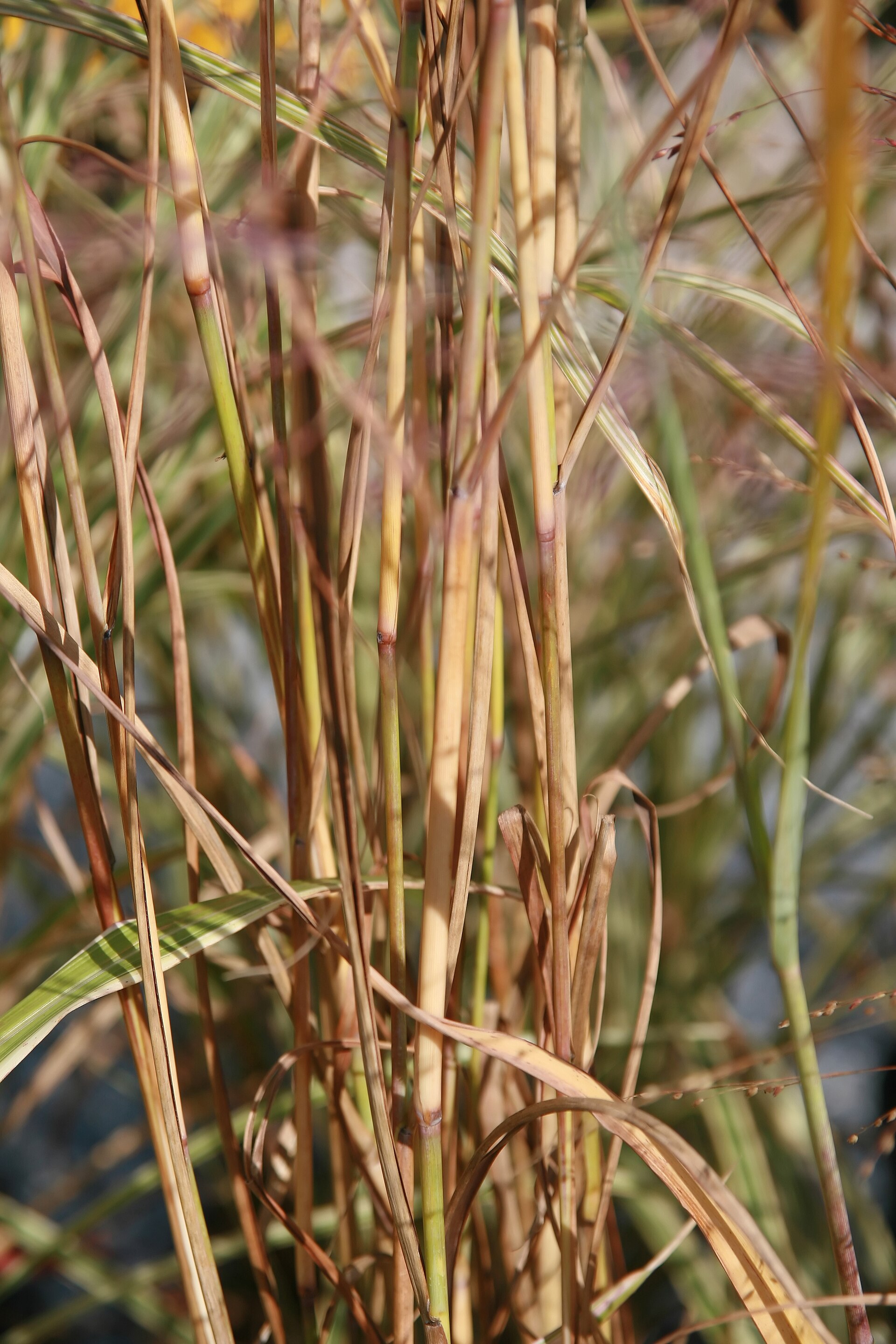
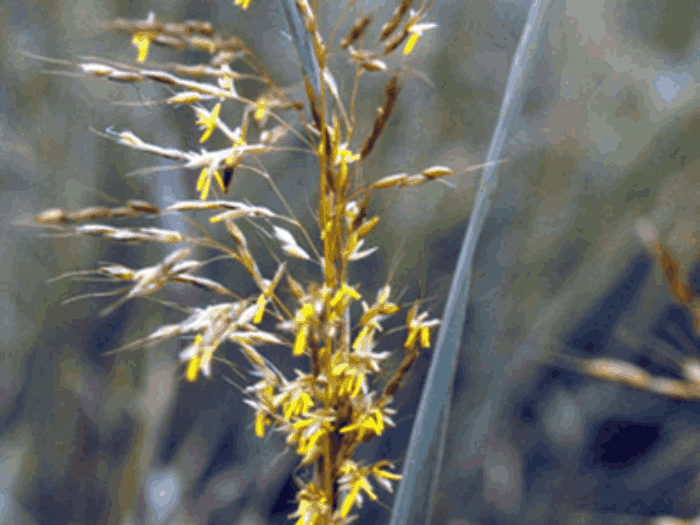
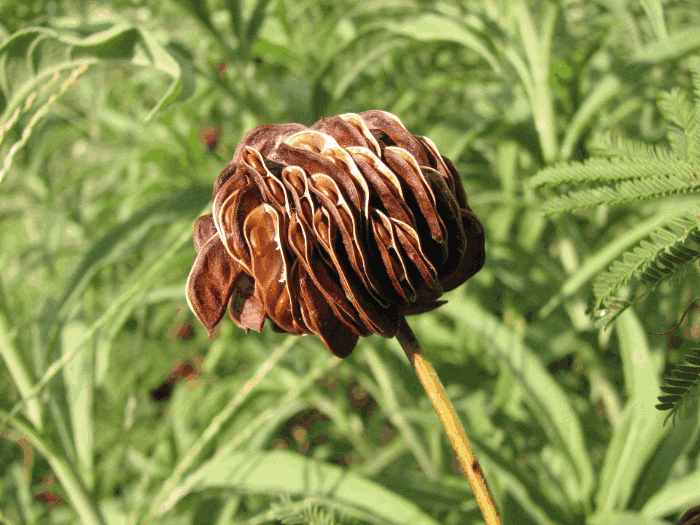
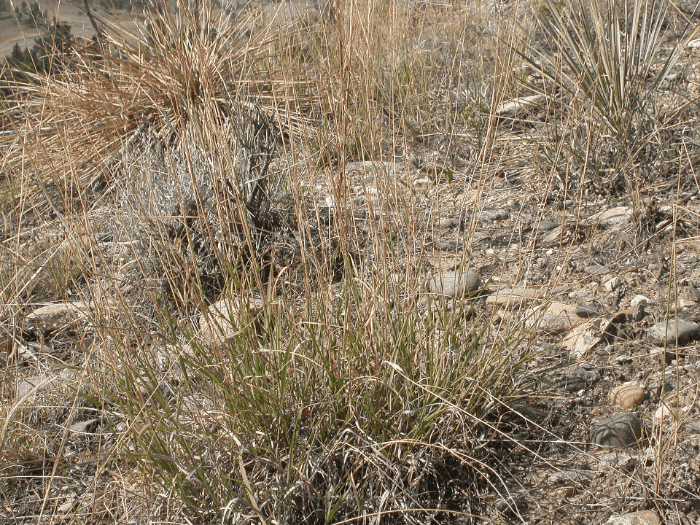
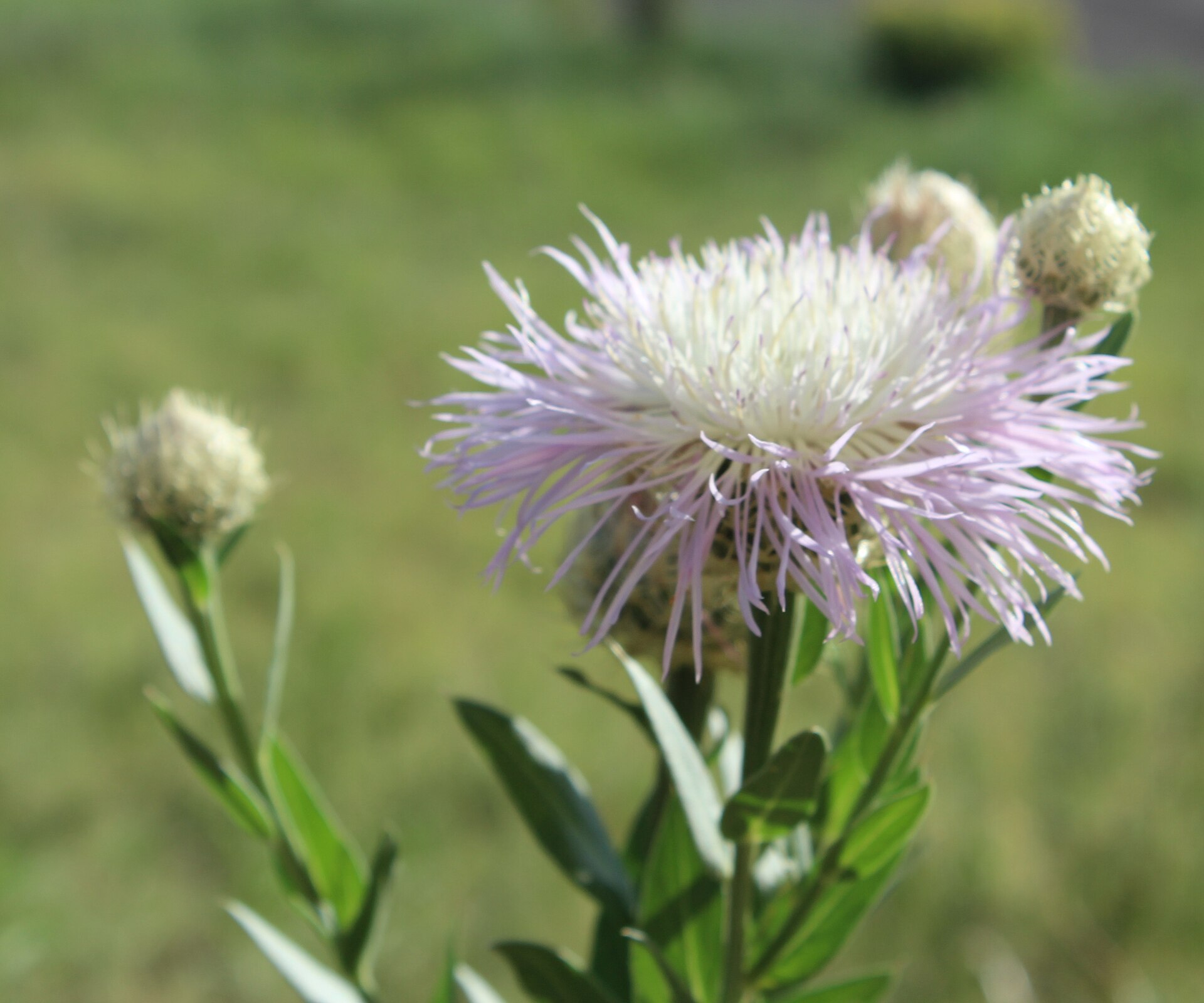
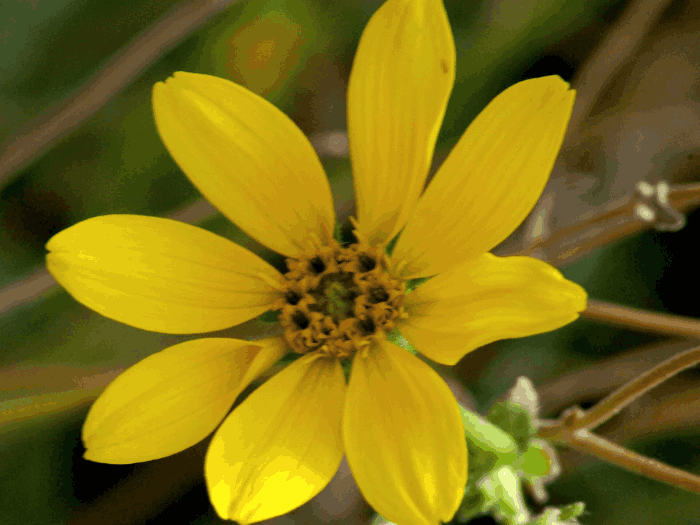
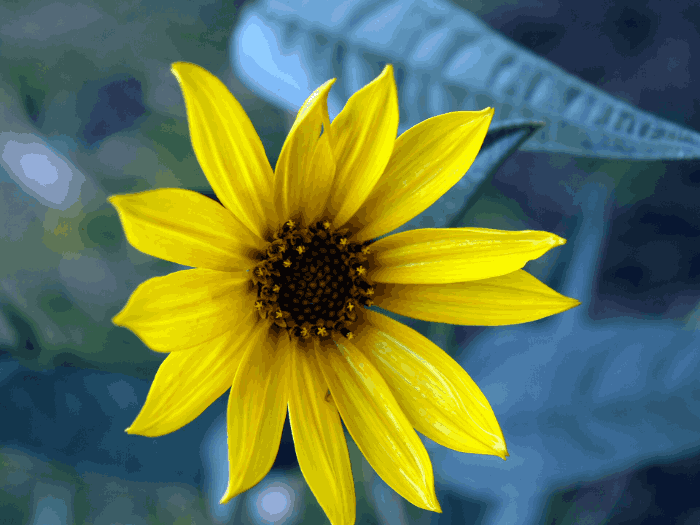
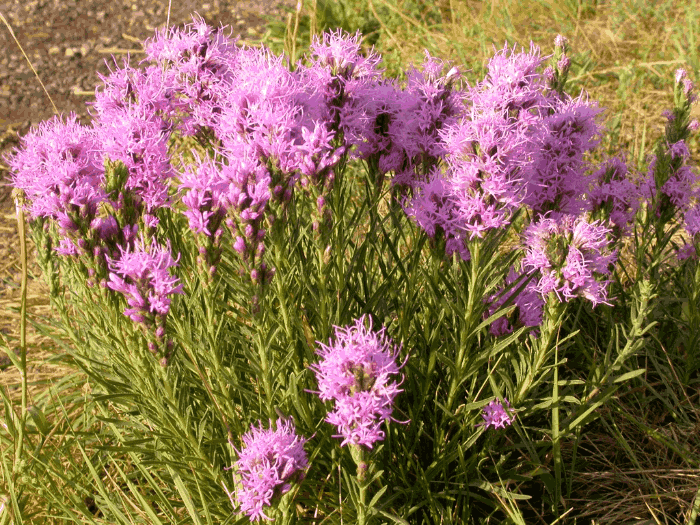
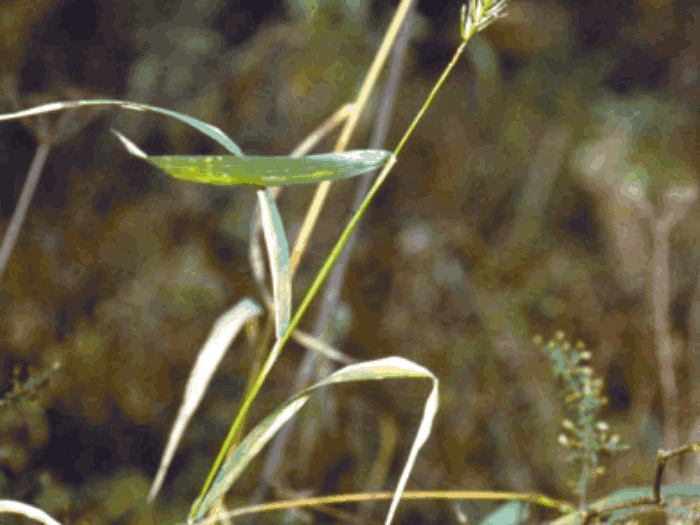
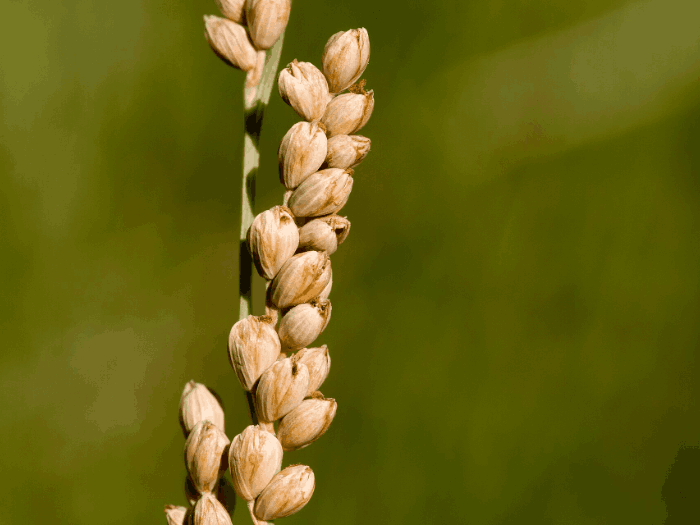
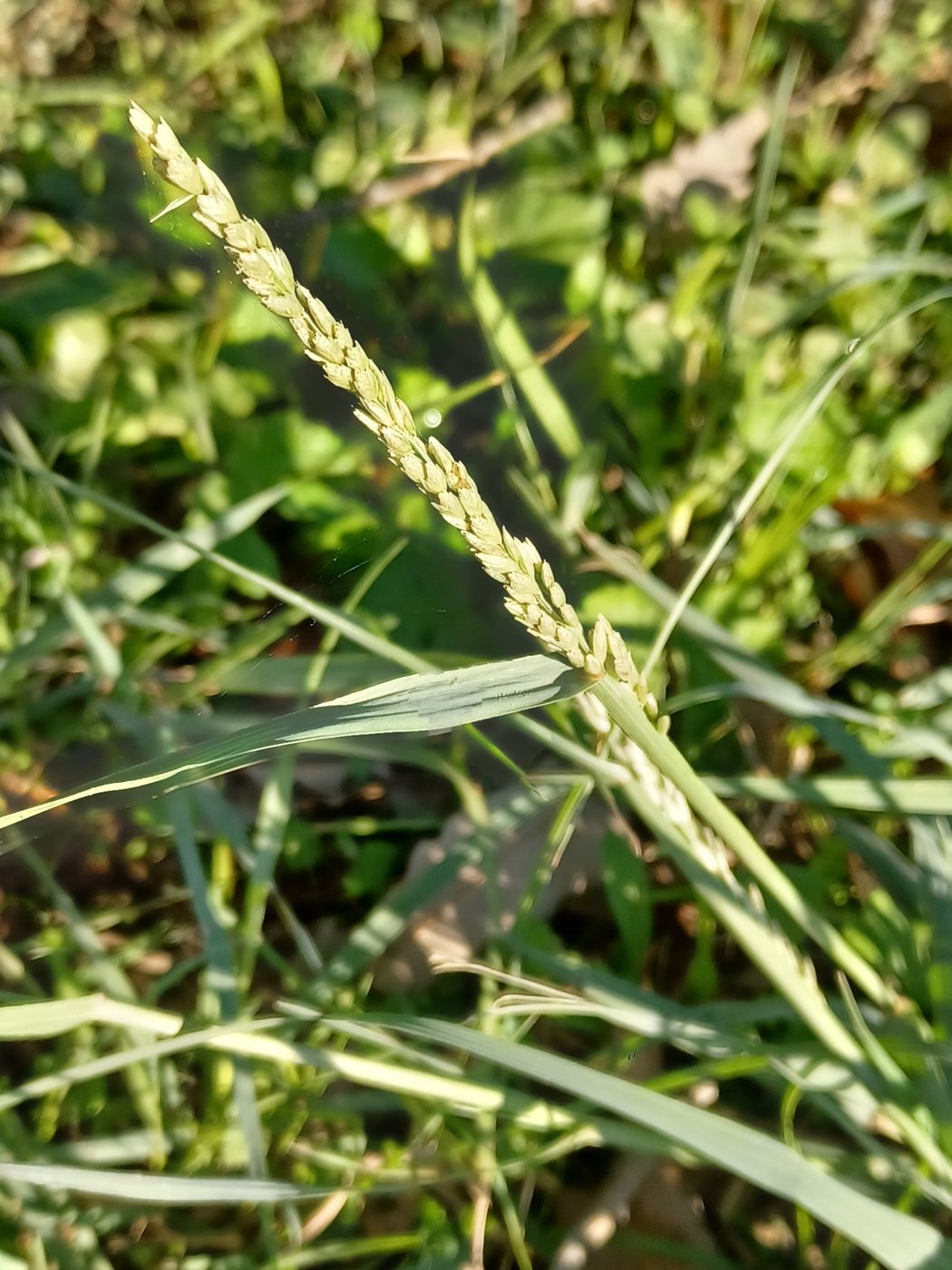
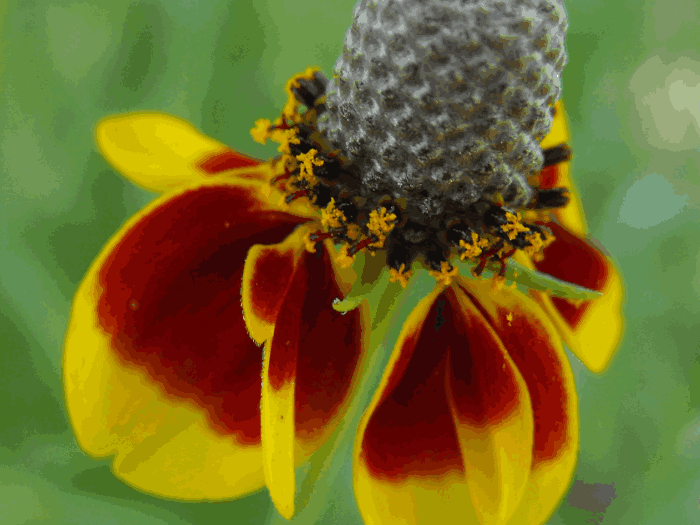
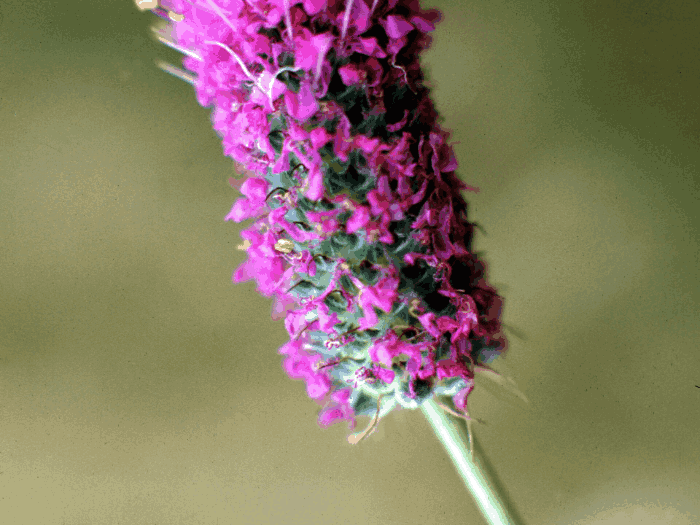
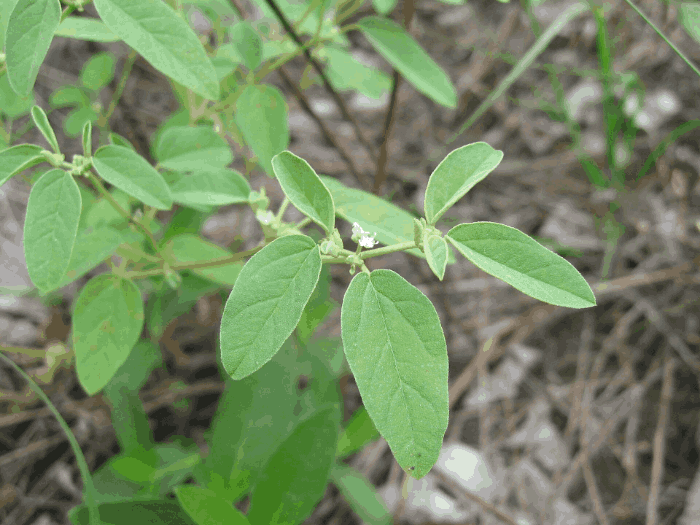
Reference images — not made on this property
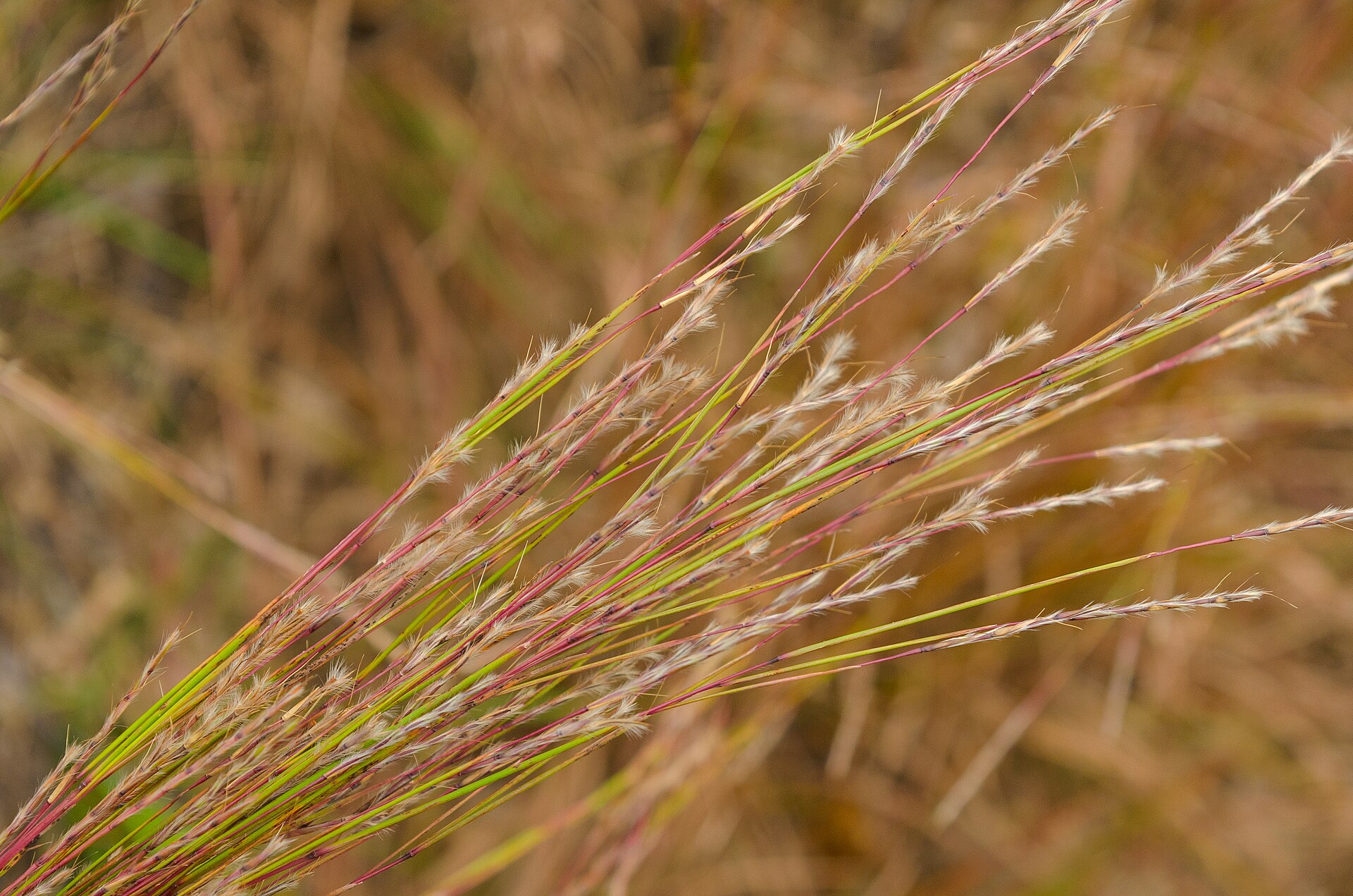
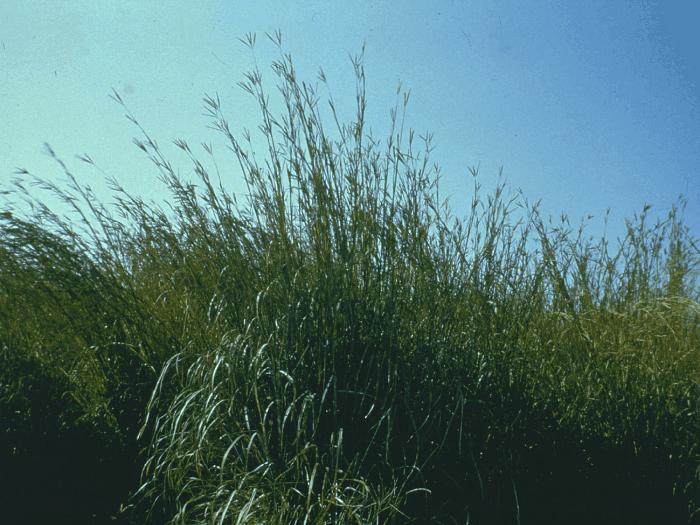
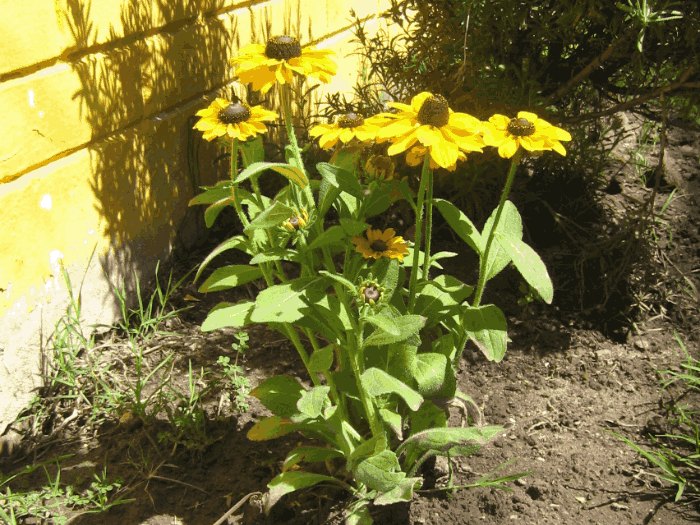
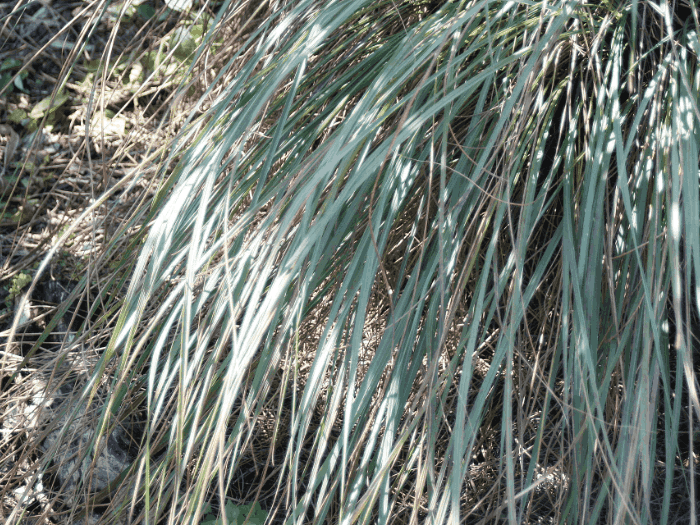
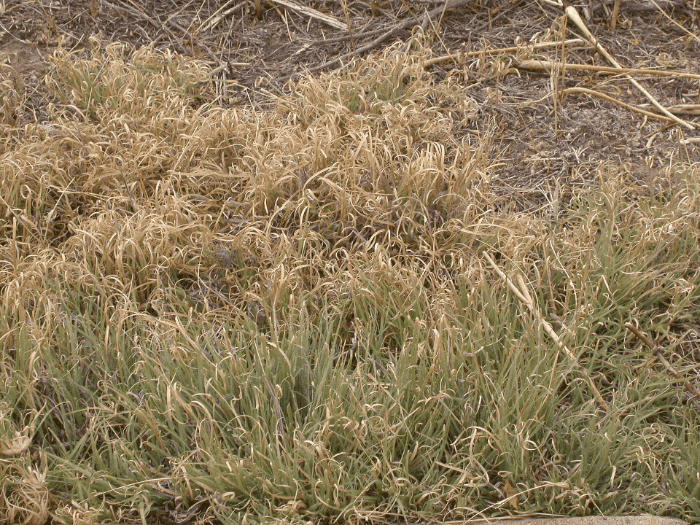
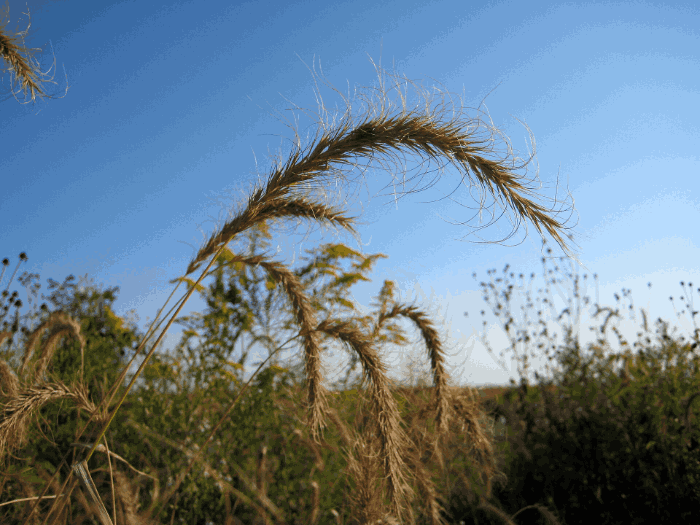
The long view
None of this is going to look like much for a while. A drilled field looks like bare dirt, then like weeds, and only years later like prairie. Realistically, we are looking at three to five years before the natives take over and the stand carries itself. The conversion is one move in a ten-year opening arc, and the grassland it becomes will need fire and care long after that. The last full harvest was an ending, and this is the slow start of the next thing.