Reading the Ground — the Soil Work Begins
Sampling the tract’s soils three ways: for the NRCS record, for the native seeding to come, and for the propagation bench’s potting mix.
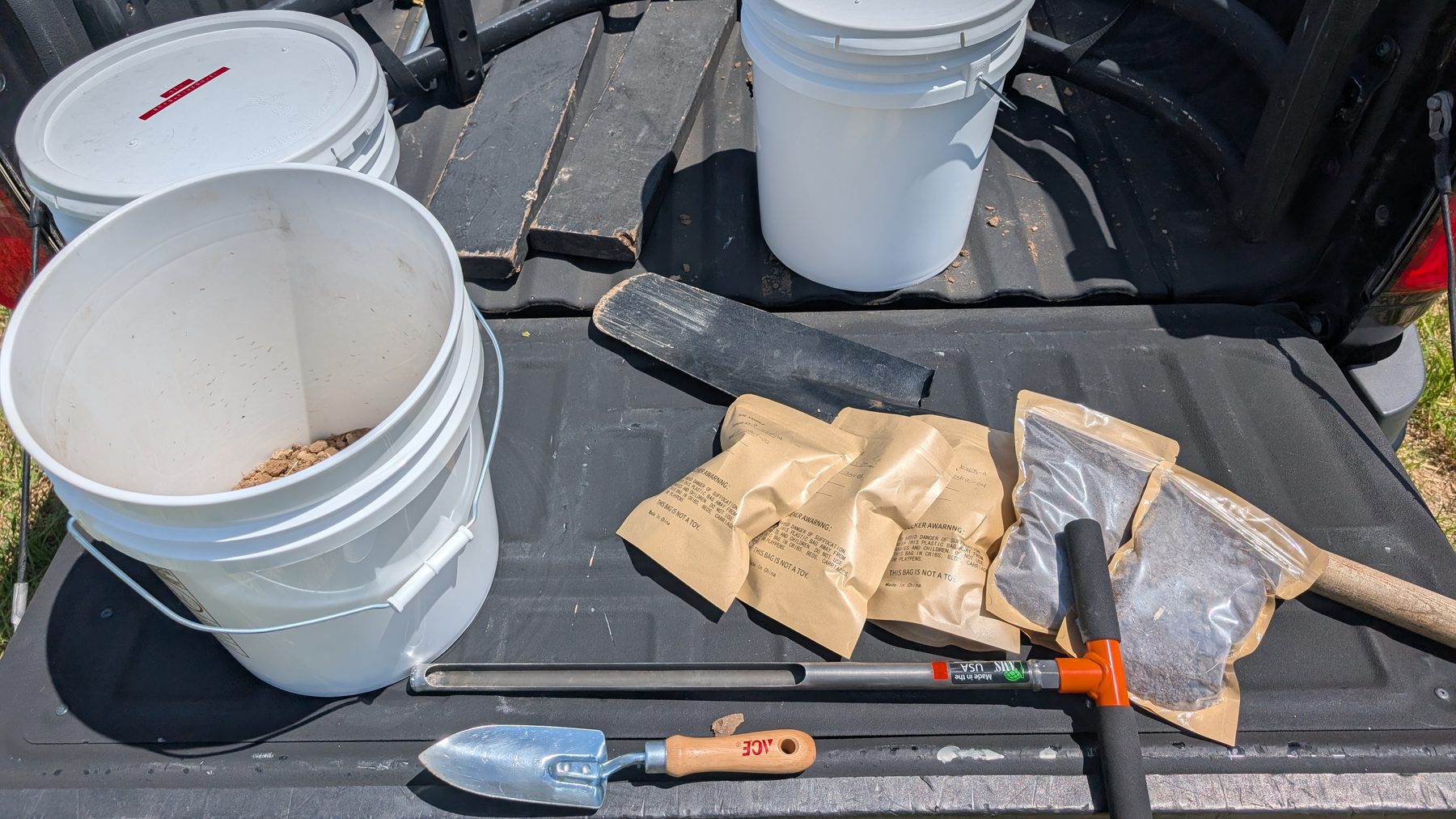 Fig · The sampling kit · bags for the lab, buckets for the bench · July 2026
Everything about this restoration eventually comes back to the soil. Before we drill the native seed or plant a single seedling from the propagation unit, we spent a day with buckets, bags and a sharpshooter to figure out the makeup of the soil across the property. We already had county records and soil surveys, but what we wanted was to verify what actually existed and where. Beyond soil type, the Tifton, having run the property for nearly two decades, has likely degraded the native soil and contributed to a monoculture both above and below the surface, lacking the bacterial and fungal activity that helps natives thrive. If we are going to need a nitrogen or phosphate boost before the natives are introduced, we need to know now.
Three reasons to dig
- The record — soil tests are part of our NRCS EQIP obligations. The conservation practices we signed up for start from a documented baseline, and the lab results go into the same public file as everything else here.
- The seeding — the native grass-and-forb mix is going into ground that's carried fertilized hay for twenty years. Knowing the texture, pH and nutrient load across the sections tells us what the seed is walking into, and where the drill plan needs adjusting.
- The bench — we gathered soil as well as sampled it. Screened native soil from the tract goes into the propagation unit's mix, so the seedlings and cuttings we raise start in the same dirt they'll get planted back into.
How the day went
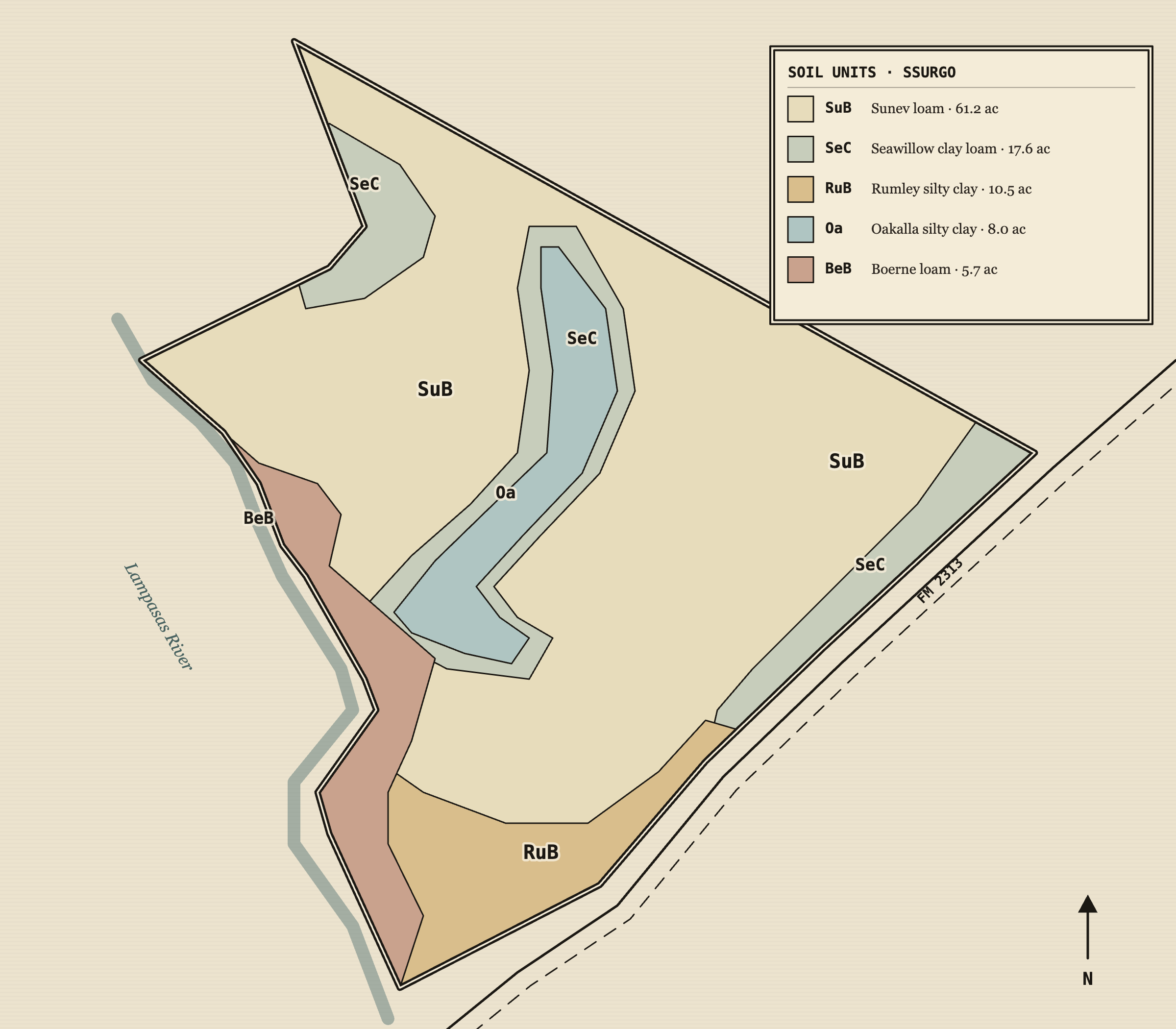
We pulled six-inch-deep cores across the working sections and composited them by area, then bagged and labeled everything against the section atlas. We put the samples for the lab in carefully labeled bags, and gathered soil for the propagation unit in labeled five-gallon buckets. It was unglamorous work in July heat, when I would rather be on the lake or swimming in the river, but this work is also the cheapest insurance the whole project buys. A seed mix or an amendment chosen against real numbers gives the whole project much better odds of success.
What happens next
Once the samples fully dry out in our hot Texas garage back in Austin, they get sealed up and sent to the Texas A&M AgriLife Extension Soil, Water and Forage Testing Laboratory in College Station. After a couple of weeks, we get our results mailed back to us for our records and for evaluation by Texas Parks & Wildlife and the NRCS. These teams will design the amendment plan for the converted acres based on this data, or tune the seed mix where a section runs thin or alkaline. We will use the data in-house to set the recipe for the propagation unit's first potting-mix trials. Once we receive the reports, we'll post them in this journal as part of the live record.
We received the results on the 28th of September. Phosphorus turned out to be the only thing this ground is short of, and the fertilizer that goes on before seed turned into a conversation with NRCS about nitrogen, which we are going to explicitly leave out of our fertilizer mix. Even small amounts of nitrogen have a chance of giving the remaining Tifton what it needs to thrive, and the natives don't need it at all. We are going to skip the nitrogen, hit it with phosphate, and give our natives a running start while depriving the Tifton of what it craves. Here are the numbers, and what we decided to put down.