The Cabin, and Why We Started
How a small family holding in the Hill Country turned into a field station.
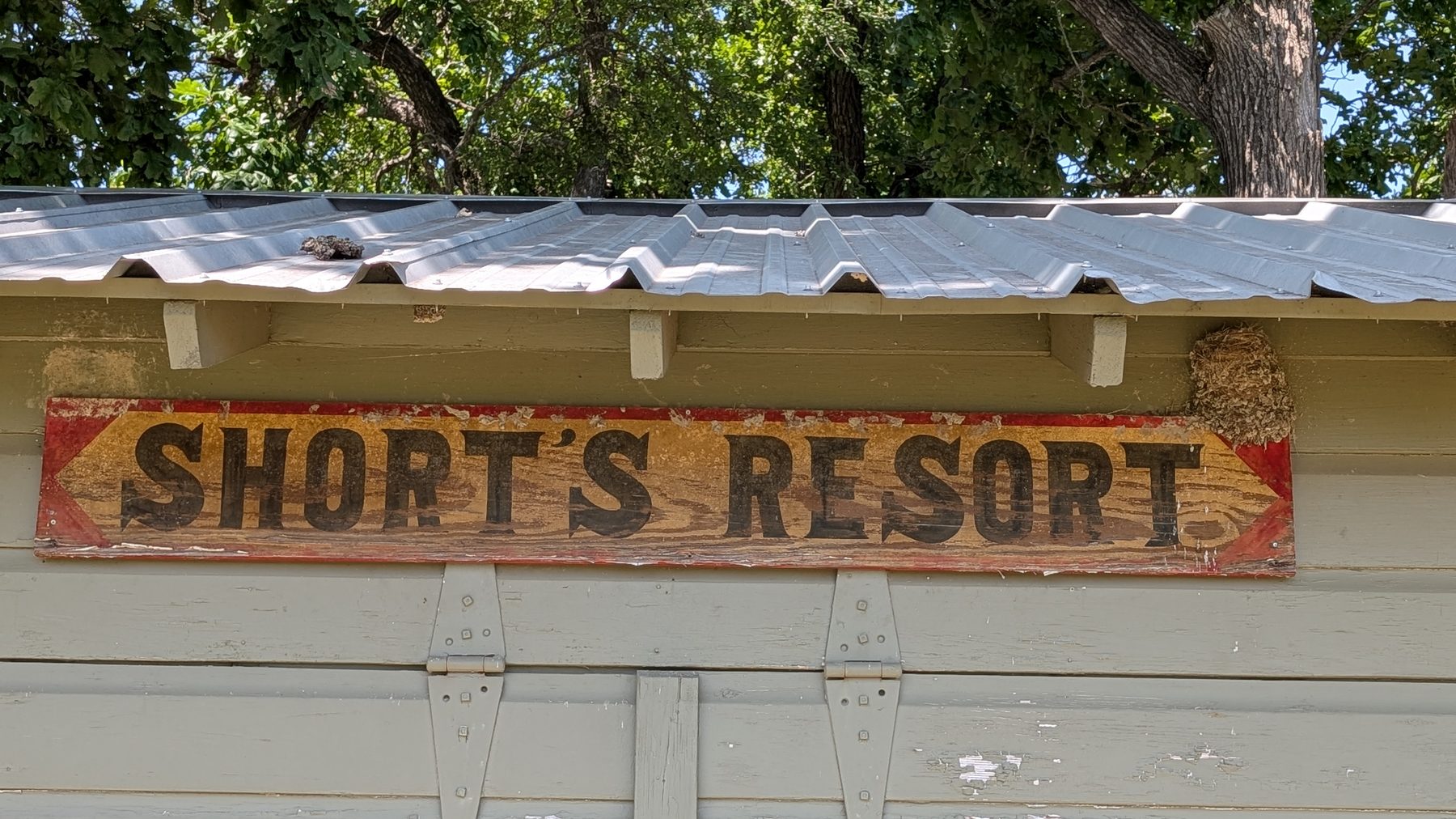 Fig · The original sign, painted by our great aunts · still on the cabin wall
In the 1940s, our great-grandfather, known around Lampasas as Short, was given this land by the federal government after he was displaced from his wheat farm in Killeen by the construction of what became Fort Hood. He grew wheat for seed on this land, as well as broom straw during the war. In the early '60s he and his kids built the cabin down by the river. A simple one-room sleeping cabin with a small kitchen, no running water, and no electricity. They built a small outhouse a short walk away that featured an old wood barrel with a toilet seat fastened to the top. At the time, the family actually lived across the field and across the dirt road on separate land, running goats and sheep and cutting hay. The cabin was the other thing — a respite from daily farm life and a place to cool off in the river after a day in the fields. Fitting for its use by the family, they named the cabin "Short's Resort," and our great-aunts hand-painted the sign that still hangs on the cabin to this day.
Four generations later, the cabin is still standing. I grew up camping out here in the summers with my grandparents, and now I take my young kids camping there as well. We're the ones keeping it now, and it's where most of the planning for the property takes place, over a campfire or sitting in the cool water with a beer in hand.
The name is a joke that stuck, and there's no resort in any traditional sense, but there's an old cabin, a cool river, and seven sections of ground that need work. The name of the cabin says something we wanted to keep in mind as we restore the land: this is a place people are welcome, and the work of fixing it ought to be welcoming too — easy to follow, written down, and free for anyone to use as a resource for their own piece of Central Texas.
An institution (kind of)
Much like our imaginative great-grandparents before us, who created the "resort," we created an "institution" to carry out the land restoration this project takes on. The institution is small, mostly one family — but we run it like something larger on purpose, because that's what keeps the work going past any single season, any one set of hands, or even the next generation that inherits this land.
What you're reading now is our institution's field journal. Here we will document what we try, what we learn, how we keep track of it, and the problems we run into on the way. The sections of the land are identified and surveyed, we add to our catalog of species on the property with every visit, and we share and demo the instruments we build along the way to help with these efforts. Our hope is that others find this project useful as a resource, and that it encourages them to take care of the prairies, woodlands, and riparian zones that make Central Texas so special, and which are rapidly disappearing from this part of the world.